Monday, November 25, 2013

Salsa Verde


One of my fave ingredients these days is salsa verde. As a dip for chips and quesadillas, on burgers, on enchiladas, on eggs, or as an additional flavor in soups, I frikkin’ love it. I’ve been making batches close to constantly and so far I haven’t gotten tired of it.

The great thing is that it’s really, really easy.

Set the oven to 400 degrees fahrenheit.

Gather up the ingredients: 2 pounds of tomatillos, 5-6 cloves of garlic, an onion, 1-2 jalepenos, cilantro, lime, and olive oil. Salt and pepper too, I forgot to include ‘em in the picture.


Next, skin and wash the tomatillos (they come with a papery exterior that peels off), and chop them and the onions into relatively the same size. Separate the garlic cloves. I keep them in a couple layers of their papery skin—we’ll push ‘em out after they're roasted. Spread them out into a single layer in 1-2 pans. Drizzle with 2-3 T of olive oil, sprinkle with salt and pepper, and put the pans in the oven.


Roast until browned and the tomatillos are collapsing onto themselves.


Separate the roasted garlic from its papery shell, add some roughly chopped cilantro, and puree the whole thing with a stick blender, or in a regular blender.


Add chopped cilantro and several squeezes of lime juice. Delicious!

Changing Seasons, Taking Stock


Why bother to make stuff from scratch when I could go to a store and pick everything off the shelf? Why go through the effort of canning food, taking the time to make bread, stock and pasta, floundering around in the garden, sewing clothes, or knitting a pair of socks?

For me there’s a few different reasons. First, I like doing it. They’re all hobbies I’m either still struggling with or am getting better at, and in any of those cases I don’t mind spending the time it takes to do them. Second, I like the feeling of control they give me. I know what I’m eating when I eat something I made myself. I know how much work and mistakes it took to preserve something from the garden, or struggle with a pattern before having something that I can use. I take better care of something I’ve made (usually), and I waste less of the food I make myself because I know what it took to make it.

Now that fall is here I’m looking at what I’ve made out of summer, and thinking about fall cooking, knitting, and sewing.


Here’s my canning yield from this summer, one jar each from batches I made. Left to right: Asian shiro yellow plum sauce, blackberry jam, straight shiro plum jam on top of shiro/blackberry jam, pear cardamom jam on top of tomato salsa, tomato jam.

I wish I’d gotten the chance to do some pickling this year, but the timing just didn’t work out for me. Last year I did dilly beans, which were spicy and awesome, and a really good pickle relish. My regular cucumber pickles were kinda uninspiring, not crisp enough. I’ll definitely have to make a point of doing the beans and relish next year.

Now that fall’s here I’m pulling out projects that I’ve knitted or sewn, and working on new projects. Ironically right now I’m working on a very light shawl that’s more appropriate for spring and summer. I’m using a tussah silk yarn that I dyed years ago and never found a good use for:


It’s a simple pi shawl that is pleasant for mindless knitting, good for on the bus.

Next, I need to finish up a sweater I started at the end of last winter. I ripped apart a beautifully-knit sweater I got in Ireland 17 years ago and only wore once, because it was a really, really unattractive fit and I finally realized I was never going to wear it, and started to knit up a new one out of the yarn. I’ll blog about that pretty soon.

Monday, October 7, 2013

"Mmmmm, soup!"


Chicken bones. They’re something that’s easy to disregard and throw out. But there’s also more to get out of them, even when viable meat has been taken off and used up. My mom used to freeze them until she had enough to make chicken stock, and I routinely do that too. The challenge then is to make sure you use ‘em instead of letting them accumulate in corners of the freezer, but usually I keep tabs on them and convert them into stock before they take up too much room. Usually.

It’s pretty easy to do. You need a few vegetables.


Carrots, celery, onion, garlic, some herbs if you have them. Some chunks of ginger can also be good but it’s not necessary. Scrub or peel the vegetables as applicable, chop them into chunks and put them in as large a pot as you’ve got. Put the chicken bones in. If you have whole carcasses from roast chicken take out any lemons or other citrus you might’ve put in the cavity. But you can leave any onions or herbs that roasted with the chicken in the stock pot.


Cover with water, add some peppercorns and a pinch of salt and bring to a boil. After it comes to a boil simmer partially covered, stirring every once in a while. I simmer it for about 4 hours.


Put a big bowl into a roasting pan. Strain the stock in the bowl and put some ice in the roasting pan. Fill the roasting pan with water. This will cool off the stock quicker. Then put the stock in the fridge overnight. You can skim off the fat that rises to the top the next day and toss that. Then you can freeze any stock you don’t immediately use in Tupperware containers. You could also freeze some of it in ice cube trays, then empty the stock cubes into Ziploc bags that’ll stay in the freezer.

The stock is good to have on hand for a quick miso soup, making a dinner soup like split pea (I uses this recipe and add ham hocks or smoked turkey legs) or minestrone, as well as for risotto, which I love.

I froze most of mine and then used a couple cups to make this tomato soup recipe (one of our go-to recipes every fall) with the last batch of tomatoes I got off of our plants. It’s pretty damn easy.

2 cups of stock, 4 pounds of tomatoes, carrot, onion, and basil.


Chop it all up, put into a pot with some salt and pepper, simmer for 30-40 minutes.


Then strain it into a large bowl. I do it using a strainer instead of a food mill, but the food mill would probably work pretty well. I let it sit for a bit, poking at it and making sure as much of the tomato and carrot puree gets through as possible, scraping the bottom of the strainer into the soup in the bowl below.

You can serve it heated up with or without the cream that makes it cream of tomato soup. And as the link states, it’s amazing with grilled cheese sandwiches (which I sometimes put a thin layer of tomato jam on).

And now the inspiration of the blog title which has almost nothing to do at all with soup:


Wednesday, September 11, 2013

Multigrain Bread


French bread is awesome, but sometimes you want a loaf bread. There’s a ton of different types out there. I’m just starting to make some forays in the bread realm, and this book is a great bread baking primer:


The multigrain bread recipe in here isn’t perfect—it makes a small loaf. Sometimes I double the recipe and split it among 3 loaf pans to get a larger loaf. But since I hadn’t made this in a while, I figured I’d just make a single batch to make sure I still had the multigrain mojo.

It calls for a soaker of cornmeal, wheat bran, and rolled oats that soaks overnight in about ¼ C of water. Then it’s added the next day to bread flour, yeast, honey, brown sugar, cooked brown rice, salt, water, and buttermilk. I didn’t have buttermilk so I mixed yogurt with milk to get something of a similar consistency.


Mix it up and knead it until it’s pliant, sprinkling in more bread flour as needed.


Then let it rise. Form into loaves in greased loaf pans and let them rise again.


Then bake in a 350F oven for 30-40 min, rotating pans after the first 20. Once they’ve baked up golden brown, tap them to make sure they sound hollow. Take ‘em out, depan and cool on a cooling rack.


The crumb came out pretty good, and it had a mellow crunch to the crust. It makes great toast—probably because of the grains and the honey and brown sugar, it browns up really nicely. I bet it’ll make good BLTs, even though the bread is on the small side.

Tuesday, September 10, 2013

Cocktail Hour


Yes, finally, a non-tomato oriented episode!

I’ve dabbling in cocktails, mostly when I get home from work and want to have something a little interesting to sip on. So far I’ve been sticking with the classics or variations thereof—although I’ve made a few gin-or-vodka plus seltzer and blackberry syrup drinks…sometimes spiked with a little gingercello.

But as the herbs in various pots are starting to founder or bolt, I figured I might as well make some use out of them—so I tried a couple of herbal syrups.


The first is a rather standard mint syrup using a recipe from a former managing partner of Gramercy Tavern. I cut his recipe in half, using 1 cup sugar, ½ cup water, and as much of the mint as I could salvage from a struggling plant. I used some of the flowers as well—I did that in the past when I made chocolate mint chip ice cream a couple summers ago and it worked out just fine.


Simmer for 5 minutes stirring frequently, then let cool for an hour and strain into a container.


The second was a lemon-basil syrup from David Lebovitz, using basil leaves, the zest of a lemon, and equal parts sugar and water. The larger amount of water makes for a lighter, less viscous syrup. More subtle and quirky. I doubled his recipe except for the lemon, because the lemon I had was pretty large. I figure this’ll be good with almost any spirit, as well as a prosecco or seltzer-based cocktail.


Simmer until it comes up to a boil, cool for an hour just like you do for the mint syrup, then strain through some cheesecloth into a jar or bottle.


Enjoy either of these with tea (iced or hot), seltzer, or any cocktail you choose.


This is a down-and-dirty mint julep. That’s my Grandma De Nys looking on. Don’t know if she ever had a mint julep, but since she was born in 1905, she most likely had a fair amount of cocktails in her day. This was pretty easy: a shot of Bulleit bourbon, a tablespoon of mint syrup, ice, and filled to the top with seltzer. I could’ve gotten away with a little less syrup, but it was pretty tasty nonetheless. I’d have garnished it with mint, but all the garnishable leaves were already used in the syrup.

Now these syrup efforts have me wondering what other ones I could make. Thyme could be good. Cilantro? Maybe, although a sweet cilantro syrup might be kinda weird. I’ll need to think about it.

Monday, September 9, 2013

“Salsa is now the #1 condiment in America.”


I finally made the lazy cherry tomato salsa today. It worked out pretty well. I had 3 types of tomatoes to work with—the chocolate cherry tomato which is herbal and intense, the green zebra which is more delicate in its herbal flavor, and the Japanese black, which has turned out to be a more standard red tomato.

The recipe calls for 12 cups of chopped tomatoes. I had no idea what that translated to in pounds/ounces. I posted a comment on the recipe post, and one commenter thought 12 cups would translate to about 4 ½ lbs. I’d already done a general google search that stated that 4 cups translated to about 2 lbs of chopped tomatoes. I did a relatively fine chop, and it consistently came out to 2 lbs of tomatoes for every 4 cups. So that’s what I ended up going with.


I also used 4 different chilis: a fresh habanero, 2 dried cascabels (they had an amazing smoky scent), 2 dried anchos, and a canned chipotle with the adobo sauce rinsed off. The rest of the recipe I kept as written. Gotta say when I put it all together and started cooking it up it smelled awesome almost immediately.


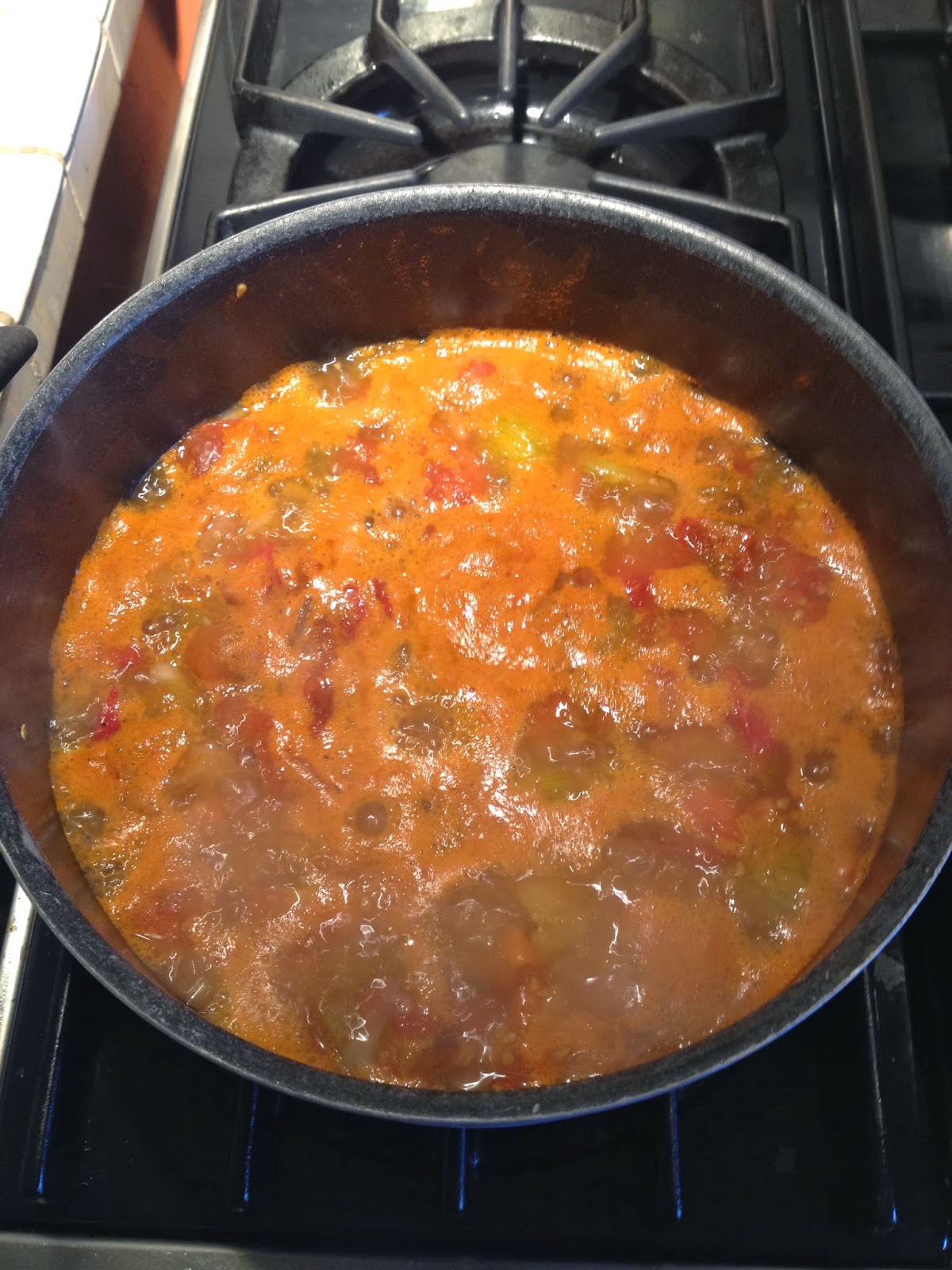
After 20 minutes of cooking I pureed it. I cooked for 20 more minutes as stated in the recipe and then started ladling it into the jars. It was really runny. I had a few moments of intense fretting where I struggled to decide whether to keep going or transfer the salsa back into the pot for more cooking. But I’d already tasted the salsa and really liked the flavor—I didn’t want it to end up tasting too “cooked” during the thickening process. So once again I just grit my teeth, finished portioning out the product, and canned those little bastards.


I gotta say I really like the flavor on this. Has some bite that creeps up on you, and a nice rounded tomato flavor that stands out on its own. I’ll be interested to see how it ages as the different pepper tastes integrates. It ended up making 6 ½ pints, so I have a half pint in the fridge I’ll eat through. I agree with the original blogger who posted the recipe—I think it’s gonna go great with eggs. But it’ll also do great with corn chips and on enchiladas. It’s good enough that I’ll consider making another batch—if I don’t find other purposes for the tomatoes to come.

Because I still have 3 lbs of tomatoes waiting for something. And a lot more on the plants.

Sunday, September 8, 2013

Some say Tomato, some say Toh mah to.


I’ve been “collecting” all of the tomatoes I can so I can have a stash for canning projects for my weekend, which starts on Monday. (I work rotating shifts so my weekends rotate too).

We’ve had a lot of rain, 2-3 days of consistent thunderstorms and rain showers, which made me a bit nervous for the tomatoes, but overall they seem to be producing and ripening at a pretty steady pace.

These were picked from the plants this morning


And these are from previous picks


Some of those are also from today’s stash, but you get the idea.

And I have ones that have split too much to leave out. They are currently in that flavor graveyard known as the fridge. But since they’re going to be the first to go into my canning projects, and I’d rather halt their flavor progress than have ‘em rot and thrown away, I’ve made my peace with it.

Tomorrow, plans permitting, I’ll make a batch of lazy cherry tomato salsa (obviously with all-kinds-of-sizes tomatoes since that’s what I’ve got to work with) and maybe some more jam. We’ll see. It’s kinda pathetic how excited I am about this, but there you go. I just love the fact that all this bounty is going somewhere with a sense of long-term benefit.